Japanese Meat and Potato(Nikujaga) 肉じゃが
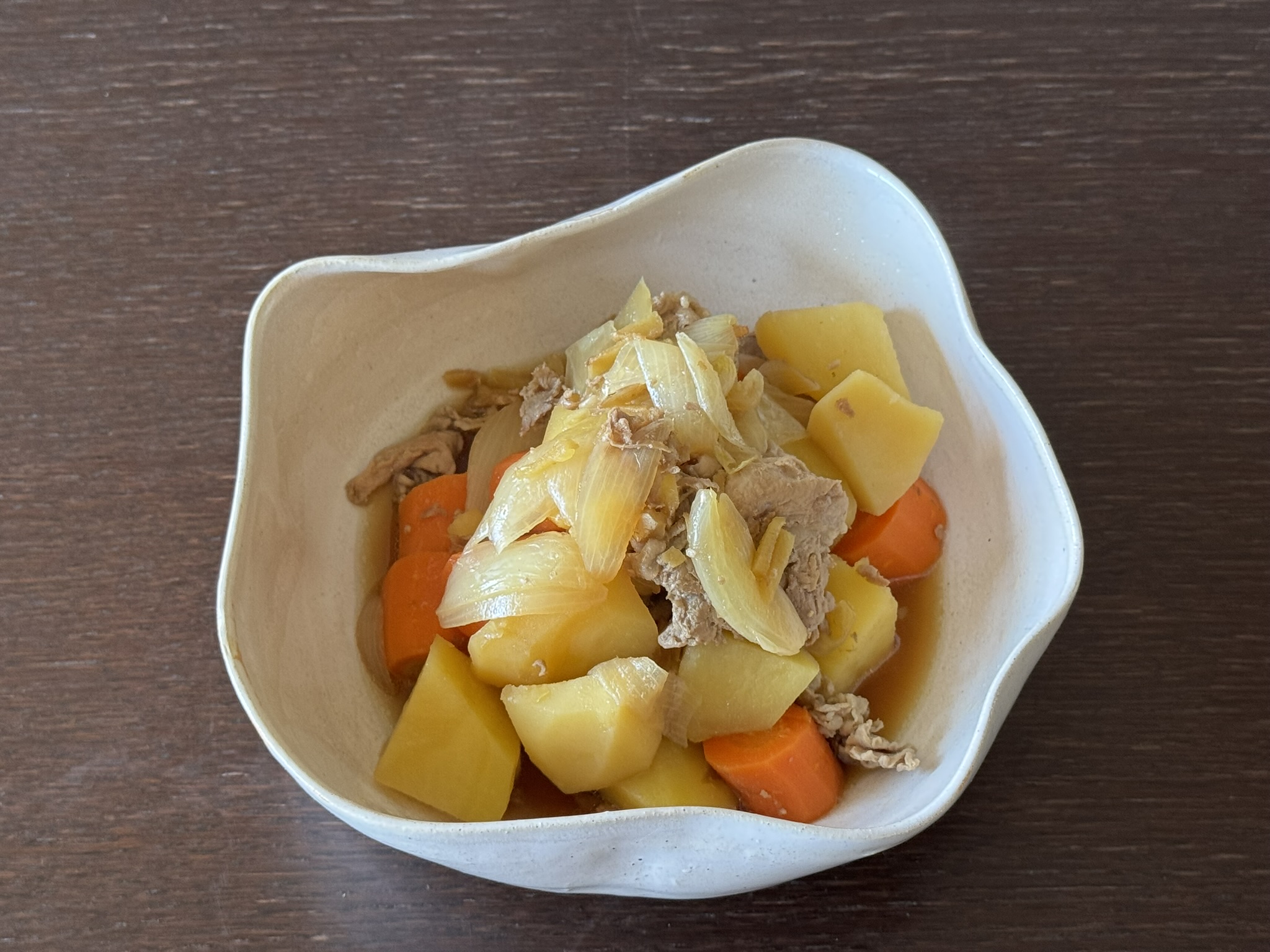
Japanese Meat and Potato (Nikujaga) 肉じゃが
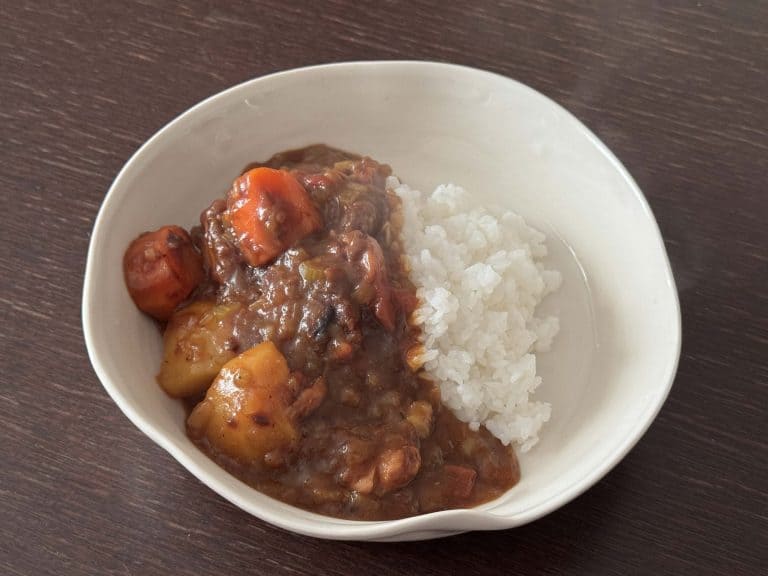
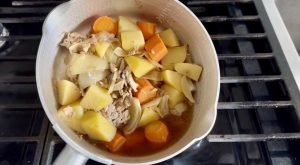
Nikujaga is a classic Japanese comfort food, especially popular in winter. Tender meat and potatoes are gently simmered in a sweet-savory broth, creating a warm and satisfying home-style dish. Made with simple ingredients easily found outside Japan, this authentic recipe is perfect for everyday cooking anywhere.
Ingredients
Method
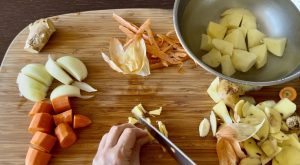
- Peel the potato skin and cut into cubes. Soak them in water until they are used.
- Peel the carrot and cut into cubes.
- Peel and slice the onion.
- Finely chop a small piece of ginger.
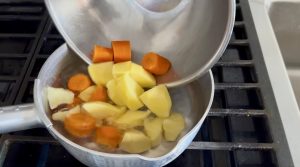
- Boil the potatoes and carrots until they get almost cooked, and drain them.
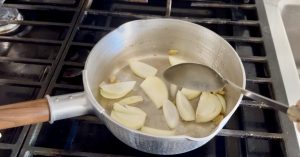
- Heat the pan, add vegetable oil, stir-fry ginger and onion until the onion turns translucent.
- Add meat and stir-fry until the color of the meat changes. If necessary, add a little bit of oil to prevent sticking.
- Add boiled potatoes and carrots, and stir-fry all together.
- Add a cup of water, and the dashi packet.
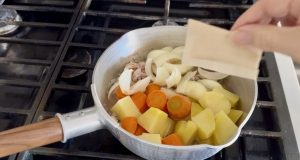
- Add 1 tbsp of sugar, 1 tbsp of sake, 2 tbsp of soy sauce. Place an aluminum sheet with holes directly on the top of the food.
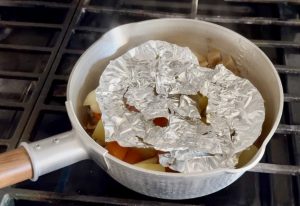
- Cover with a lid and simmer until just a little sauce is left. It's ready! We hope you enjoy your "TOKYO FLAVORS, NEW YORK STYLE" meal! Itadakimasu!
Notes
-
Choose your meat:
Nikujaga is traditionally made with thinly sliced beef or pork. Meat with a little fat is ideal, as it stays tender and adds richness and flavor to the dish. -
Aluminum foil or Otoshibuta (drop lid):
If you have an otoshibuta (a small lid that sits directly on the food), feel free to use it instead of aluminum foil.
If using aluminum foil, lightly crumple it and make a few holes in the center to allow steam to escape. Both methods help:- Distribute heat evenly
- Keep ingredients submerged in the simmering liquid
- Reduce rapid evaporation for more concentrated flavor
-
Simmering tip:
Adjust the heat level during simmering so the ingredients do not stick to the bottom of the pot. The dish is ready when the pan liquid is mostly absorbed, with just a small amount remaining.